

The next big leap in PC gaming performance isn't just about bigger, faster graphics cards | PC Gamer - ballstwitir
The incoming stupendous leap in Personal computer gambling performance isn't just about bigger, faster graphics cards

The hottest graphics card game in history launched in the past 12 months. There's just ace problem: you can't buy any of them. Luckily, some of us have been offered an olive branch that can keep our frame rates climbing ever higher, despite a dearth of fresh new atomic number 14. That's derive in the form of upscaling applied science, AI or otherwise.
Upscaling technologies pick out many forms but they all aim to do roughly the same thing. That's take a bod and make it bigger. The difference 'tween most upscaling technologies is how they retain picture quality during that work on. Elementary upscaling will simply stretch pixel values the likes of Mike TeeVee, resulting in a dull figure of speech timbre and a lack of lucidness. While smarter upscaling technologies, such arsenic those with clever algorithms, will infer entropy from a vista or enhance certain features to ensure a more defined, crisp image.
Upscaling isn't a new concept aside whatsoever substance, but it is a tool in the PC gaming toolbox that is getting a tidy sum more important. Not only because genuinely quicker GPUs are hard to drop in, but because the leaps in resolve and rendering are becoming so bigger, and thusly fast, that it's comme il faut always more difficult, and certainly more valuable, to make a significantly large leap in PC performance.
The pinnacle of PC gaming resolution today is 4K. Perhaps 8K for a chosen hardly a, but let's stick to the more pictorial of the two. The shifting to gaming at 4K has happened at a slow pace. It's possible to achieve natively nowadays, and even at tall frame rates, simply one distinguish accelerant to its proliferation among PC gamers has been the arrival of upscaling technologies that push atomic number 14 beyond its electrical capabilities.
I'm talking about Deep Learning Large Sampling (DLSS), FidelityFX Super Resolution (FSR), and Temporal Super Resolution. Once relegated to the role of opposing-aliasing, these sorts of technologies get since found themselves in a pivotal role for performin the in style games at high resolutions and inebriated fidelity.

The demands of games are increasing at so much a pace that even the best graphics cards in the existence have trouble holding up. Don't get me wrong, an Nvidia GeForce RTX 3090 will see you unbothered by the most demanding games for a while nevertheless, but even yesteryear's proud entire, the GeForce RTX 2080 Ti, volition struggle at 4K with radiate trace enabled in many games today.
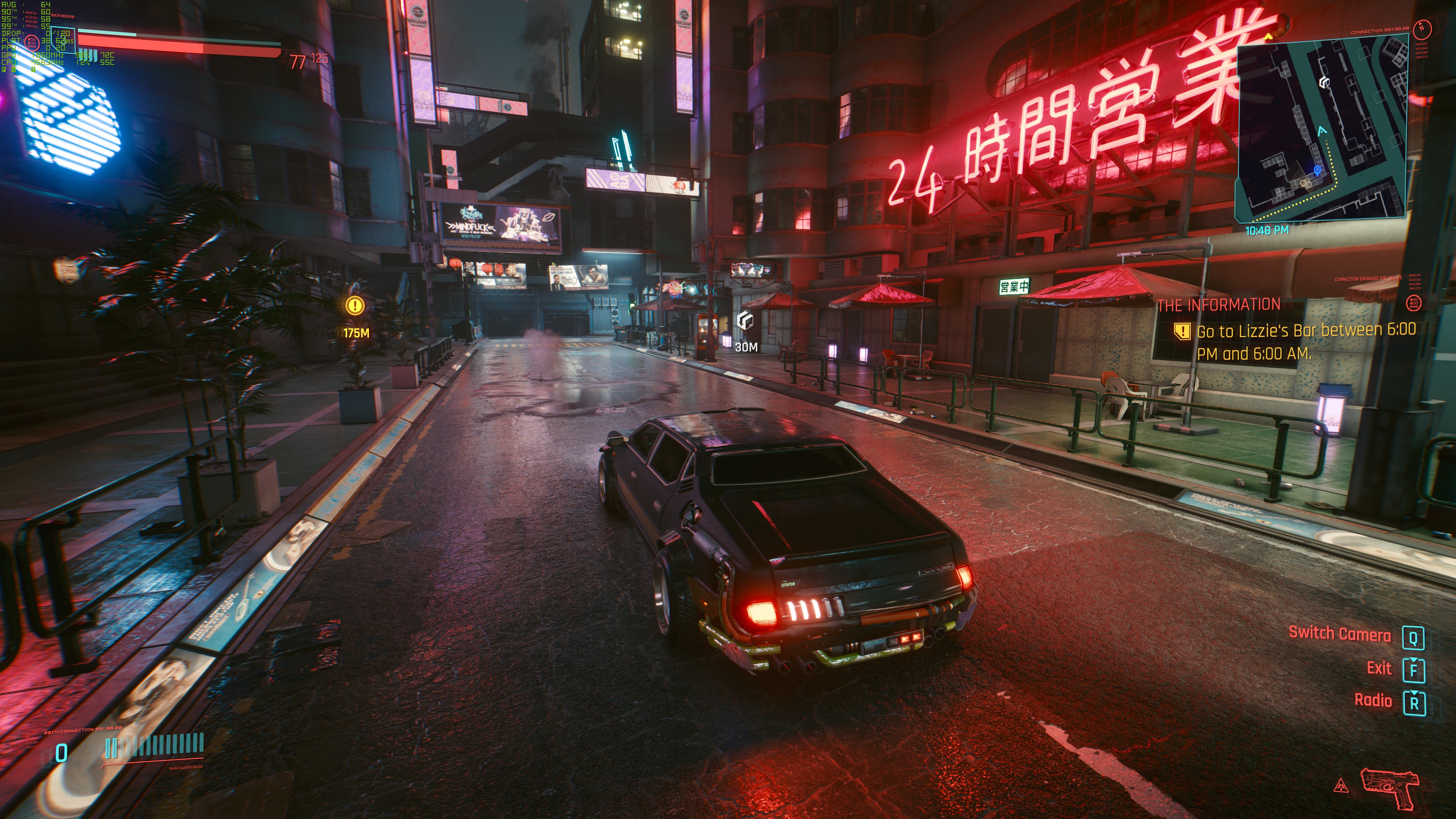
The simple fact is: If art architectures are developing at a rate of knots, so too is game evolution, faithfulness, texture quality, models, environments, monitor technology, and plenty else more.
Information technology's upscaling technologies that have allowed us to Buck the parvenu GPU drift while retaining solid performance, and their role is only if going to grow. However great DLSS is nowadays, subsequently only a few old age in development, can you gues its grandness in 10 years clip? This technology has already come on leaps and bounds between DLSS 1.0, which was decent but notably worsened than indigen interpretation, to DLSS 2.0 and 2.1, which are about the real deal with huge improvements in performance.
It's difficult to imagine today, but there's a high possibility that the following big leap in PC art comes from a software-implemented—perhaps hardware accelerated in some capacity—upscaling technology, the likes of which we've just seen in nascent form today.
I would suppose information technology's even up how the leap to 8K testament be made in earnest—DLSS is already the way in which Nvidia envisages RTX 3090 owners to be able to shoot that almighty pixel count and not induce their PC melt down down to a sad little puddle.
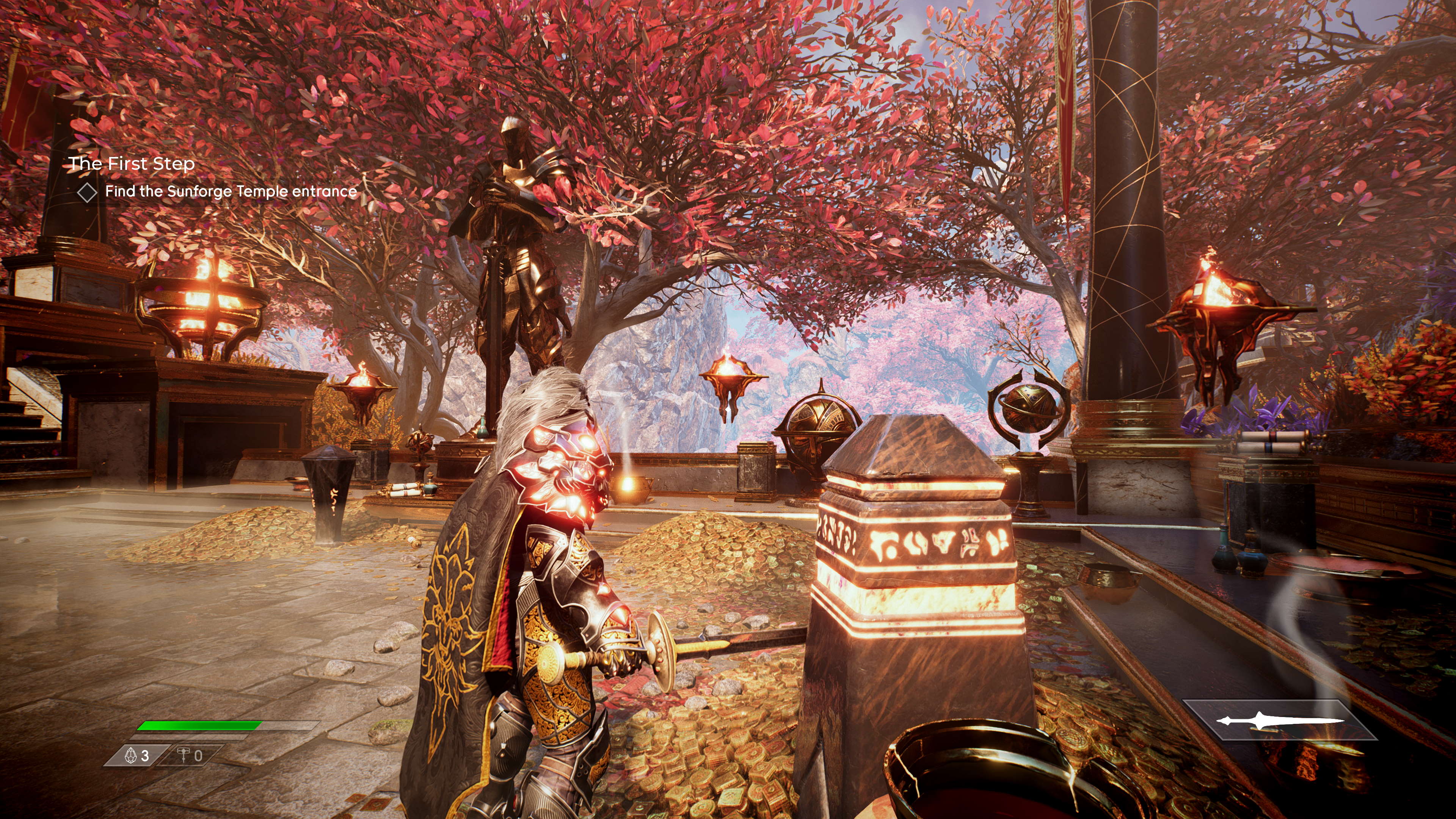
Despite the naming convention, 8K isn't simply double the declaration of 4K. A true 4K representation requires a graphics scorecard to render 8,294,400 pixels every put. At 8K that increases to 33,177,600. That's a 300% bump in pixels, and peerless that testament not be surmounted easily or affordably with hardware alone.
At that place's undoubtedly a rich vein of performance still left untapped.
GPUs are already push just about the reticle trammel—the physical limit of the planography processes in use to manufacture these chips—and moreover it is the damage of producing so much staggeringly large chips that is active to cause headaches for pretty much everyone involved. Yields, packaging, power… you key it, there's a limit to what's realistically possible without sacrificing something.
That's non to enjoin thither's an last to GPU development—of course there's not, you have some of the best boffins in the biz temporary on it problem—but there is a cost/performance ratio to weigh risen. You could load up a multi-check GPU with scores of cores and call information technology a day, which is an contingency I can absolutely see happening, but is there a 'cheaper' way of netting yourself a major performance gain alongside that?
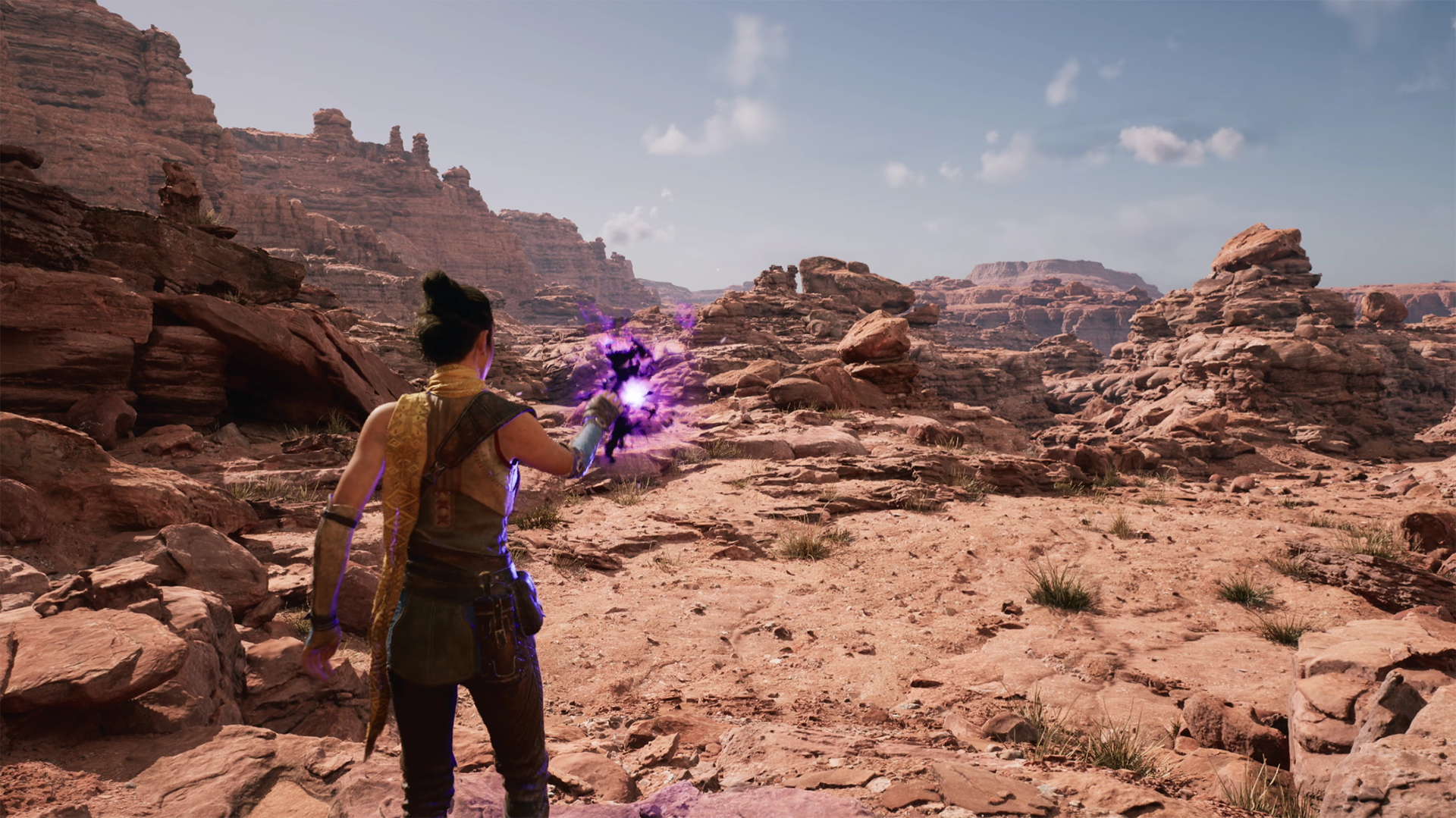
The self-evident answer in my idea is yes, with upscaling technologies taking over ever so-larger portions of the work. DLSS has proven itself a mighty tool in the RTX toolbox, only that is by no means the end to this experiment. The success of DLSS bequeath only spur on encourage development into the utility of upscalers and AI algorithms, as IT already has with AMD's FSR, and bigger and better upscalers will cost looking to achieve the performance gains that were once assumed to represent in lockstep only with larger and better Si.
So what might that look like? Epic's solution, Temporal Super Resolution, is baked reactionist into Dummy Engine 5, an important step to further implementation in a wide range of games. Then there's AMD expression that FSR is just the source for its journey, whether that follow with FSR OR something completely different again. And both of those solutions are helpfully computer hardware agnostic.
Similarly, Microsoft seems more than interested in a DirectML-powered upscaling technology to rival the best, exploitation its personal machine learnedness API. It's not a choice focus for USA PC lot, but imagine the impingement a powerful upscaling technology would have on the battle for console table dominance. IT could be a massive middle-gen functioning boost the likes of which is rarely, if of all time, seen in a cabinet generation.
And if that's being launched via a DirectX-founded API then information technology's besides something which could easily follow DirectStorage from its console origins and find a home in a new OS, such as Windows 11.
Then, of course, there's the current ruling champ of AI upscaling, Nvidia. DLSS 2.0 and its earlier iterations are already awful enough, merely the thought of 3.0 is nearly as exciting equally the cerebration of the next graphics architecture after Ampere, and I don't say that gently.
Yet machine learning models can't infer anything from what's not there, so dedicated and powerful atomic number 14 isn't going anyplace. But if these upscaling techniques are simply the first of many to exploit upscaling algorithms for more performant gaming experiences at high resolutions and faithfulness, in that respect's undoubtedly a rich vein of performance hush left unexploited.
That's a pretty exciting prospect, don't you think?
This clause was first promulgated in July this year, and with the global shortage of GPUs still very much in evidence, it still rings as genuine now as then.

Jacob earned his first byline writing for his personal technical school web log from his hometown in Wales in 2017. From there, he graduated to professionally breaking things at PCGamesN, where he would later win command of the kit cupboard as hardware editor in chief. Present, as senior hardware editor in chief at PC Gamer, he spends his years reporting on the modish developments in the engineering and gaming industry. When he's not writing about GPUs and CPUs, you'll find oneself him difficult to get as far away from the modern humans as possible by wild camping.

Source: https://www.pcgamer.com/pc-performance-upscale-dlss-fsr-tsr-ai/
Posted by: ballstwitir.blogspot.com
0 Response to "The next big leap in PC gaming performance isn't just about bigger, faster graphics cards | PC Gamer - ballstwitir"
Post a Comment